This update covers two closely spaced bargaining sessions, held on May 6th and May 11th, where discussions focused heavily on positions, workload protections, and leaves. Across both sessions, your Unit 3 bargaining committee continued pushing for clearer job definitions, stronger accountability mechanisms around workload, and explicit protections against excessive preparatory work, unclear job expectations, and the erosion of leave rights through vague external references to labour standards legislation.
May 6, 2026
Following a verbal offer at the April 29 bargaining session, McGill formally provided the written version of the Article 11 (Positions). These included several significant gains, including language specifying that graders are McGill students who do not perform student-facing duties, and that course assistants are undergraduate students.
These are important wins that help protect student work, clarify the distinctions between positions, and limit the university’s ability to blur lines between job categories.
The session also included discussions about what exactly constitutes “student-facing work.” For example, both parties discussed whether activities such as training, attending lectures, or preparatory course readings should fall under that definition. These discussions are important because they help establish clear boundaries around job expectations and workload.
The bargaining committee informed McGill that we would return with proposed modifications to Article 11 at the following session.
McGill also tabled a proposal on Article 13 (Selection and Appointment). Importantly, they agreed to one of the union’s key demands: including employees’ degree level in the hiring lists provided to the union. While this information would be self-declared by employees through Workday, this nevertheless signalled an important improvement in hiring transparency.
The employer also agreed to provide department-specific training for first-time workers. Following these changes, the bargaining committee accepted the Article 13 proposal pending translation!
Finally, the union tabled a counterproposal on leaves (Article 15) in response to McGill’s March 25th counterproposal, which had aggressively removed much of the leave language from the collective agreement in favour of simply referencing the Act respecting labour standards externally.
As we discussed in our previous newsletter, this is problematic because collective agreements are meant to enshrine protections above the legal minimum and protect workers against potential legislative changes. Our proposal restored much of this language while explicitly incorporating leave entitlements already found in the Act respecting labour standards, the Unit 1 collective agreement, and existing McGill policies.
The bargaining committee also tabled a “red circle” Letter of Agreement for McGill Writing Centre employees. Currently, some MWC workers are entitled to paid leaves that are not otherwise included in the collective agreement. This Letter of Agreement would preserve those existing entitlements, including one paid moving day.
McGill stated that they would attempt to return with a response on leaves at the following bargaining session.
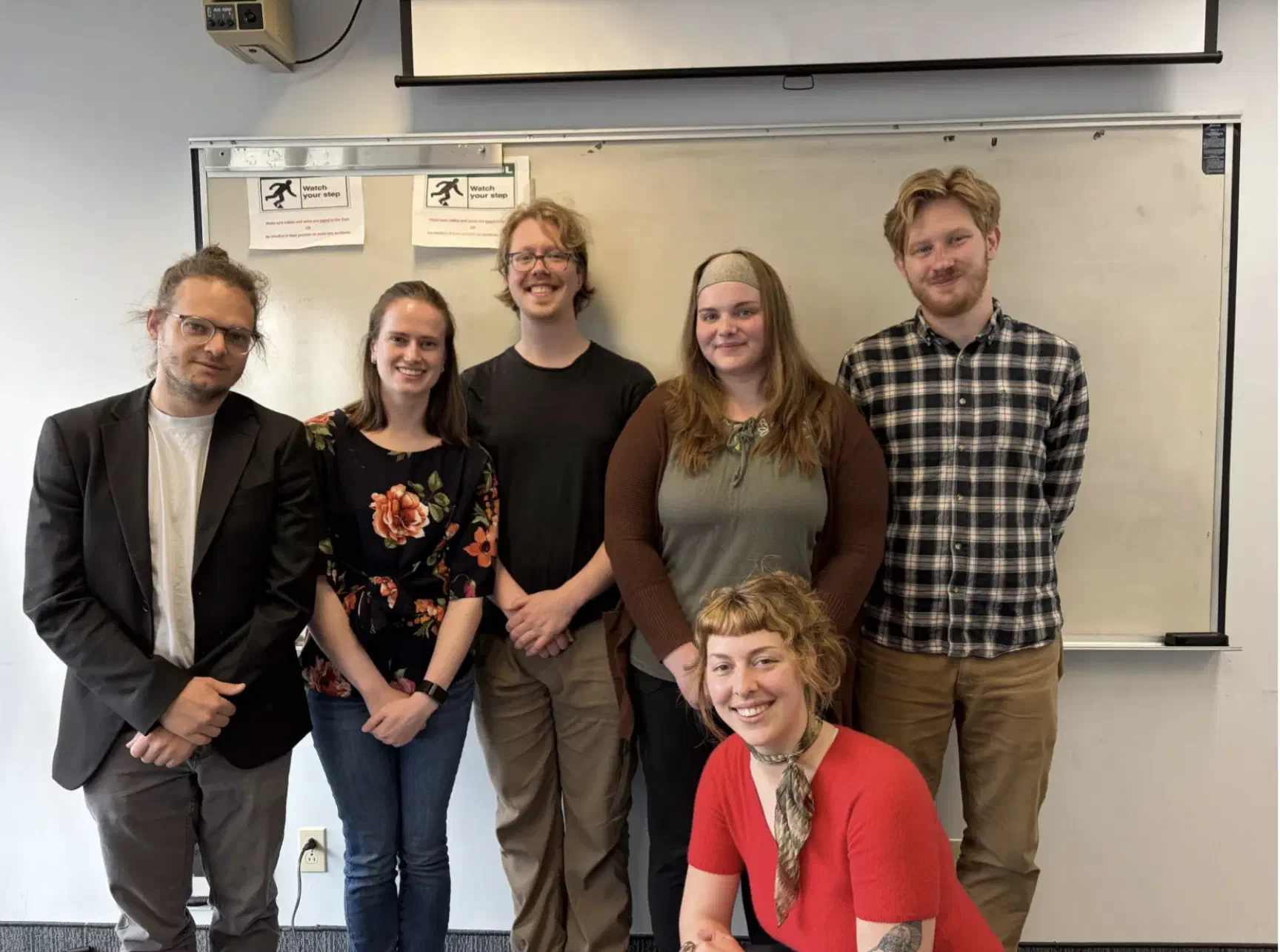
In attendance on our side of the table were Emma Moore (4th Year, Industrial Relations), Donald Morard (PhD Candidate, Grader, History), Jordan Cowie (2L Faculty of Law), Ari Blondal (President), Grey Lorbetskie (U3 Grievance Officer), and Guillaume Forest-Allard, our advisor from our affiliate union Fédération nationale des enseignantes et des enseignants du Québec (FNEEQ). We were also joined by four members for open bargaining!
May 11, 2026
At our May 11th session, discussions continued on Article 11, specifically around grader duties and workload forms.
The bargaining committee returned with modifications to the language on the grader position, including a proposal that graders spend no more than 20% of their contract hours on non-grading activities such as course readings, reviewing grading guidelines, and required training. This proposal emerged directly from discussions with graders about the amount of preparatory work often expected before grading can even begin. In particular, concerns around excessive preparatory work have been consistently raised by graders in the Faculty of Arts, where graders are often expected to complete substantial course readings and familiarize themselves with course material before beginning evaluation work. The bargaining committee emphasized that preparatory work should remain limited and clearly defined within contracts.
McGill stated that they understood the concern, but indicated uncertainty about whether a formal 20% threshold would be possible. They said they would continue considering the proposal and return with a response to this soon.
Discussions also continued on Article 11.03 regarding workload and hours of work. The union has been pushing for McGill to notify both the union and Human Resources when a contract falls below a certain number of hours for the first time in a given course. While the union initially proposed a threshold of 30 hours and McGill previously countered with 5 hours, the bargaining committee has now proposed a 10-hour threshold as a compromise position. McGill stated that they would reflect on this proposal and respond at a future session.
The bargaining committee also re-tabled workload forms and reiterated that they are an important accountability mechanism, particularly for graders whose work often includes preparatory tasks that can otherwise become invisible or poorly tracked.
Importantly, McGill acknowledged that, given our discussions around preparatory work, workload forms are important for graders and indicated they could agree to workload forms for both graders and course assistants.
The employer raised concerns about the current format of the forms, particularly regarding the number of categories and overall complexity. McGill expressed interest in a more simplified version. The bargaining committee emphasized that detailed workload forms are important because they clearly outline expectations and help workers identify when assigned tasks exceed their contracted hours.
At the next bargaining session, McGill is expected to return with further responses on Article 11 (Positions), Article 15 (Leaves), and McGill Writing Centre positions. The union will also return with a proposal on liberations.
The bargaining committee and employer have agreed to continue bargaining throughout the summer, and several new bargaining dates have now been scheduled! Open bargaining remains one of the strongest ways members can support the committee and demonstrate that Unit 3 workers are paying attention to negotiations. We encourage members to attend upcoming sessions and stay involved as bargaining continues. Click here to sign up to attend a session!
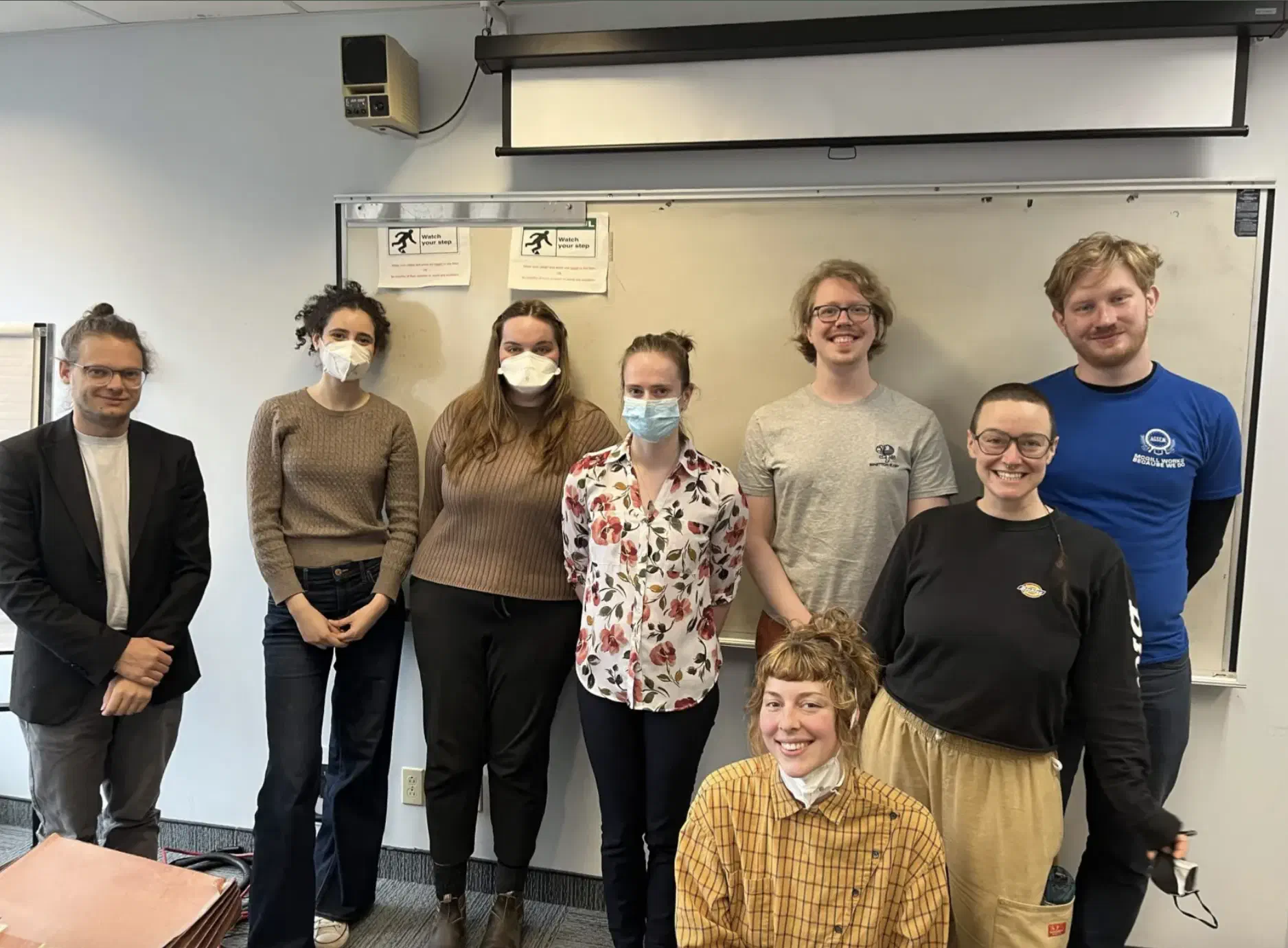
On our side of the table were Emma Moore (4th Year, Industrial Relations), Donald Morard (PhD Candidate, Grader, History), Jordan Cowie (2L Faculty of Law), Ari Blondal (President), Grey Lorbetskie (U3 Grievance Officer), and Guillaume Forest-Allard, our advisor from our affiliate union Fédération nationale des enseignantes et des enseignants du Québec (FNEEQ).
Do you have thoughts and insights to provide (of course you do!)? Please don’t hesitate to reach out to bargaining.casual1@agsem-aeedem.ca with your insights, questions, or concerns!
Love and solidarity,
Your Bargaining and Bargaining Support Committee